Table of Contents
- Boost Your Business Equipment Investment with Section 179
- What Is the Section 179 Tax Deduction for Business Equipment?
- Section 179 Expensing vs. Bonus Depreciation: Key Differences
- Claiming the Section 179 Deduction for Your POS System
- Advanced Tax Planning with Section 179 for Growing Businesses
- Common Questions About Section 179 and POS Equipment
- Take Advantage of Section 179 Savings with The POS Brokers
Boost Your Business Equipment Investment with Section 179
The Section 179 tax deduction for equipment allows a business to fully expense the purchase of qualifying equipment in the year of purchase. Normally, those costs are deducted over multiple years through depreciation. Section 179 allows the business to write off the full cost in the year the equipment was purchased. This immediate deduction reduces taxable income dollar-for-dollar, freeing up capital for further growth. Because point of sale hardware and software are qualifying equipment, quick-service restaurants and retailers can improve their operations and then take a tax deduction.
At POS Brokers, we’re your partner for better payment processing, and we help you navigate this opportunity by matching you with the right POS equipment for your business needs. Our team connects you with a broad selection of POS platforms and hardware—from full-service restaurant systems to mobile payment terminals—and supports you through selection, setup, and ongoing service. With the Section 179 deduction lowering the net cost of these investments, you can implement the technology that drives efficiency and customer satisfaction without straining your budget. We serve businesses nationwide, shipping to all fifty states, and we work to qualify you for free or discounted hardware through our promotional programs when available. Our dedicated account team ensures you have the support to understand how the deduction can apply to your equipment purchase and maximize your tax savings. Let’s explore exactly how this deduction works and what it means for your business.
Key Takeaways
- The Section 179 deduction is a powerful provision in the U.S.
- Two key strategies based on accelerated depreciation allow businesses to recover the cost of qualifying point-of-sale (POS) equipment immediately rather than over a number of years.
- The Section 179 deduction allows businesses to write off the full cost of qualifying POS hardware and software in the year of purchase rather than depreciating the cost over a number of years.
- Large equipment purchases for business growth can be aided by Section 179.
- After looking at different advanced tax planning strategies, business owners have a lot of questions regarding the Section 179 deduction and POS equipment.
What Is the Section 179 Tax Deduction for Business Equipment?
The Section 179 deduction is a powerful provision in the U.S. tax code that allows businesses to immediately expense the cost of qualifying equipment and software in the year it is purchased and placed in service, rather than depreciating it over time. This tax break covers a wide range of tangible business property, from POS hardware and computers to office furniture and machinery. Annual dollar limits and phase-out thresholds apply; for the most current numbers, refer to IRS Publication 946. To qualify, the property must be used more than 50% for business and be operational by year-end.
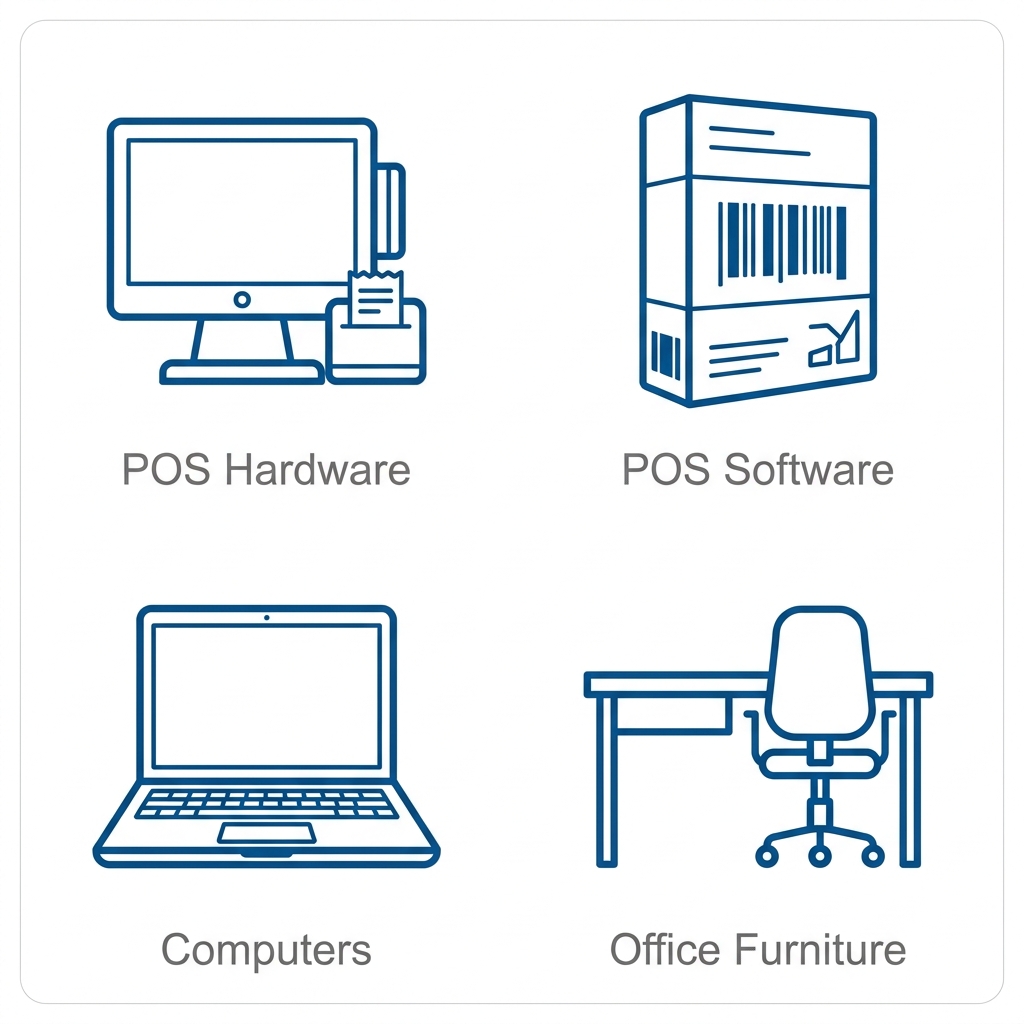
Here’s an example of the types of equipment that typically qualify.
| Equipment Category | Qualifying Under Section 179? | Notes |
|---|---|---|
| POS hardware (terminals, card readers) | Yes, generally qualifies | Must be placed in service by year-end; eligibility depends on IRS rules being current. |
| POS software | Yes, generally qualifies | Software must be purchased separately and not bundled. |
| Computers & peripherals | Yes, generally qualifies | Includes laptops, desktops, monitors, printers; all must be business-use. |
| Office furniture | Yes, generally qualifies | Desks, chairs, filing cabinets; must be used primarily for business. |
| Machinery & equipment | Yes, generally qualifies | Manufacturing, restaurant kitchen equipment, etc.; subject to annual dollar caps (check IRS Publication 946). |
While the table covers many common purchases, eligibility is not automatic. Annual dollar limits cap the total deduction, and if purchases exceed the phase-out threshold, the deduction is reduced dollar for dollar. It is necessary to consult with a tax professional to verify the limits and plan purchases in an optimal way. For example, spreading large investments across tax years can be more advantageous than claiming the full Section 179 amount in a single year.
Hardware and software are eligible property if they are used in the active conduct of the trade or business. Even if a system is financed, the full purchase price may be expensed in the year of installation, as long as it is treated as an acquisition for tax purposes. Taxpayers should keep clear records and a tax professional should confirm all conditions are met.
Section 179 provides for an immediate expense deduction, but is limited in other ways. A taxpayer should assess the total effect of all the relevant deductions and tax credits.
Section 179 Expensing vs. Bonus Depreciation: Key Differences
Two key strategies based on accelerated depreciation allow businesses to recover the cost of qualifying point-of-sale (POS) equipment immediately rather than over a number of years.
How Section 179 Expensing Works
When a business opts for Section 179 expense treatment, the election begins at the time the business files its tax return for the year the POS equipment is placed in service. The placed-in-service (PIS) rule states that for a deduction to be allowed for the year, the POS hardware and off-the-shelf software must be installed, operational and ready for their intended use during the year for which the deduction is claimed. The deduction applies to tangible personal property purchased for business use, a definition that comfortably covers POS terminals and commercially available POS software licenses. To make the election, a business completes IRS Form 4562 indicating the asset and cost to expense. The deduction is taken in the year the property is first placed in service, and it cannot exceed the business’s taxable income for that year.
Bonus Depreciation Rules and How They Differ
Bonus depreciation automatically applies to qualifying property, and a business can opt out of it. In the case of a business opting out of bonus depreciation, an affirmative election is required with respect to particular assets. For the 2024 tax year, the bonus depreciation percentage has been reduced to 60%, from 80% for the 2023 tax year. Property that is eligible for bonus depreciation is broader than property that is eligible under the Section 179 expensing election. Equipment that is acquired used also qualifies for bonus depreciation. To qualify for Section 179, the property must be acquired by purchase for use in the active conduct of a trade or business. Bonus depreciation has no taxable income limitation, and no dollar limitation on the total amount of deduction, and can be more valuable for businesses with large equipment investments or those operating at a loss in the current year.
| Feature | Section 179 Expensing | Bonus Depreciation |
|---|---|---|
| Eligibility Requirements | Tangible personal property purchased for business use and placed in service during the tax year; off-the-shelf software qualifies | New or used property with a MACRS recovery period of 20 years or less; acquired after September 27, 2017, and placed in service before 2027 |
| Maximum Deduction Amount (2024) | $1,220,000 total deduction across all qualifying property | 60 percent of the adjusted basis after any Section 179 election |
| Phase-Out Threshold (2024) | Begins when total qualifying property placed in service exceeds $3,050,000; deduction reduced dollar-for-dollar above that amount | No investment-based phase-out threshold |
| Carryover Treatment | Disallowed deduction carried forward indefinitely subject to future-year taxable income limits | Creates or increases a net operating loss that may be carried forward under applicable NOL rules |
| Interaction Between Methods | Applied first to the cost of qualifying assets | Applied to the remaining basis after Section 179 and other first-year deductions |
Current Deduction Limits and Phase-Out Thresholds
The maximum Section 179 deduction for the 2024 tax year is $1,220,000, and a phase-out threshold is set at $3,050,000. In the case of a business exceeding the $3,050,000 limit, the Section 179 deduction is reduced on a dollar for dollar basis for the excess amount. The allowable deduction cannot be reduced to below zero.
In terms of the differences in benefits between bonus depreciation and Section 179, it is entirely business specific. This information is not intended to be tax or legal advice. We encourage every business to hire a tax or legal advisor, especially in light of making a purchase that could potentially have a significant impact on a business’s taxes.
Claiming the Section 179 Deduction for Your POS System
The Section 179 deduction allows businesses to write off the full cost of qualifying POS hardware and software in the year of purchase rather than depreciating the cost over a number of years. Compile the documents listed below.
Use this checklist to organize your records:
| Document | Purpose | Example |
|---|---|---|
| Purchase Invoice | Proves the date, cost, and description of the POS | Itemized invoice from vendor |
| Proof of Payment | Shows the amount paid and payment method | Bank statement, credit card receipt |
| Asset Detail Record | Lists each asset with cost, date, and description | Spreadsheet or fixed-asset listing |
| Business-Use % Calc. | Demonstrates that the equipment meets business-use test | Worksheet showing business vs. personal use |
| Copy of Filed Form 4562 | Confirms the election was made on the tax return | Signed copy filed with IRS |
Identifying Qualifying POS Purchases
Qualifying assets include tangible personal property used in your trade or business. For example, touchscreen terminals, card readers, tablets, barcode scanners, receipt printers, and cash drawers all typically qualify if used more than 50% for business. POS software bundled with hardware and essential for operation may also be included. The equipment must be placed in service during the tax year you claim the deduction; that is when it’s installed and ready, not just the purchase date. You’ll need to calculate the percentage of business use, as only that portion is eligible. For multiple assets, record the placed-in-service date for each item separately. The deduction cannot exceed taxable income from active trade or business, and current limits change annually, so confirm thresholds with IRS guidance or your CPA.
Documentation Required to Support Your Deduction
The purchase invoice proves the date, cost, and description; ensure it’s itemized. A bank statement, credit card receipt, or canceled check verifies you paid the amount claimed. The asset detail record, whether in a spreadsheet or a fixed asset listing, shows each item of equipment and the cost and the date each was placed in service. An accurate asset detail record is critical—if the IRS ever audits, you’ll need to produce a clear listing. A business-use percentage worksheet demonstrates eligibility, especially if equipment serves mixed purposes. Keep a signed copy of your filed Form 4562. Additionally, retain any signed contracts or agreements that support the placed-in-service date and verify the business purpose. We recommend retaining all records for at least three years from the filing date, and longer if the asset remains in service. This is in accordance with IRS guidelines.
Steps to Complete IRS Form 4562
To take this deduction, use Form 4562, and in Part I, check the box for Section 179, and then list the property. For each asset, include a description (e.g., ‘Clover Station Duo’), the cost, and the amount you wish to expense. If you include multiple assets, provide a detailed schedule. The total amount you elect can’t exceed the limit set by the IRS. Look to the form’s instructions to find the limit. The deduction appears on your business return (e.g., Schedule C for sole proprietors, or Schedule K-1 for partners and S corporation owners). The remaining basis of the asset can be depreciated under regular MACRS. This information is for educational purposes only. Consult your CPA for tax advice.
After you properly document and claim your deduction, you can research more tax planning strategies to continuously maximize your business.
Advanced Tax Planning with Section 179 for Growing Businesses
Large equipment purchases for business growth can be aided by Section 179. From machinery for large scale production to infrastructure for distribution and point of sale systems, large equipment purchases can be aided by the provisions of Section 179.
The nature of your business entity will impact how the deduction is applied. For businesses structured as pass-through entities (a sole proprietorship, partnership, S corporation, or most LLCs), the deduction flows to the owners’ individual returns, reducing their taxable income from the business. For a C corporation, the deduction is claimed on the corporation’s own return, potentially lowering its taxable income but not directly benefiting shareholders. The following table summarizes how the treatment of Section 179 varies by entity type.
| Business Entity Type | Pass-Through Deduction? | Special Limitations |
|---|---|---|
| Sole Proprietorship | Yes | Deduction limited to the owner’s aggregate business income; cannot create a net operating loss from the activity. |
| Partnership | Yes | Passes through to partners, subject to each partner’s basis in the partnership interest and at-risk rules. |
| S Corporation | Yes | Flows to shareholders; limited by shareholder’s stock and debt basis; reasonable compensation requirements may apply. |
| C Corporation | No | Deduction taken at the corporate level; limited by corporate taxable income; does not reduce shareholder personal income. |
| LLC (pass-through taxation) | Yes | Treated as sole proprietorship or partnership for deduction purposes; subject to the same income, basis, and at-risk limits. |
As shown, pass-through entities allow owners to offset business income directly, but each structure introduces its own constraints. S corporation shareholders must have sufficient stock and debt basis to claim the passed-through deduction, and partnerships allocate the deduction based on the partnership agreement.
Growing businesses planning large equipment purchases should also consider spreading acquisitions across tax years to remain within the annual inflation-adjusted limit. We always recommend consulting a tax professional to align purchases with your specific income projections and entity structure.
Common Questions About Section 179 and POS Equipment
After looking at different advanced tax planning strategies, business owners have a lot of questions regarding the Section 179 deduction and POS equipment.
What types of POS equipment are eligible?
Generally speaking, if you purchased and placed into service tangible POS equipment during the tax year (i.e. credit card terminals, tablets, or card readers, to name a few), it should qualify. Please double check with your CPA.
Does POS software qualify?
Depending on the circumstances, off-the-shelf business operation software may be considered a deductible expense. Please verify with a tax advisor.
What is the annual deduction limit?
Every year the IRS sets the Section 179 limit, and there is generally a cap on the dollar amount. Please check with your tax professional on the current numbers.
Our team can help you apply Section 179 savings toward a new POS system. Reach out to us to learn more.
Frequently Asked Questions
Is there a limit to how much I can deduct under Section 179 for business equipment this year?
For the 2024 tax year, the maximum Section 179 expense deduction is $1,220,000. The deduction phases out dollar for dollar once total qualifying property placed in service exceeds $3,050,000. Annual limits change, so refer to IRS Publication 946 for current figures.
Does purchasing a new POS system for my business qualify for the Section 179 tax deduction?
Yes, a new POS system typically qualifies for Section 179 expensing. Qualifying assets include POS hardware like terminals, card readers, tablets, scanners, and printers, along with off-the-shelf POS software. The property must be used more than 50% for business and placed in service by year-end.
What is the difference between Section 179 expensing and bonus depreciation for business equipment?
Section 179 lets you immediately expense qualifying property up to an annual dollar limit ($1,220,000 for 2024) with a phase-out above $3,050,000 and cannot exceed taxable income. Bonus depreciation automatically deducts a set percentage (60% for 2024) of the remaining basis, has no dollar cap or income limit, and applies more broadly including used property. Section 179 requires an election; bonus depreciation is default but can be opted out.
Are POS software and hardware both eligible for Section 179 tax savings?
Yes, both POS hardware and software are eligible for Section 179 expensing. Hardware such as terminals, card readers, tablets, scanners, and printers qualifies as tangible personal property. Off-the-shelf software purchased separately also qualifies, provided the equipment is used more than 50% for business and placed in service during the tax year.
What documentation do I need to keep to claim the Section 179 deduction for new POS hardware?
Keep the purchase invoice itemizing the date, cost, and description of the hardware; proof of payment like a bank statement or receipt; an asset detail record listing each item with its cost and placed-in-service date; a worksheet showing the business-use percentage; and a signed copy of the filed IRS Form 4562. Retain records for at least three years.
Take Advantage of Section 179 Savings with The POS Brokers
The Section 179 tax deduction for business equipment can significantly reduce the cost of upgrading your POS system. Certain merchants receive free or discounted hardware with no setup or cancellation fees. Speak with a POS specialist today. By clicking ‘get pricing’ you consent to marketing calls/texts; reply STOP to opt out. We do not sell your information; it is used for order fulfillment and marketing. Shipping carriers may experience delays; we disclaim liability for carrier delays. Consult a tax professional regarding eligibility.
Get Expert POS Guidance Today
Now that you understand how the Section 179 deduction can significantly reduce the cost of your business equipment, it’s time to put those savings to work. The POS Brokers can help you select qualifying POS hardware, from Clover, Lavu, and other top brands, which may be eligible for this year’s deduction. We offer free or discounted hardware for merchants who qualify, with no setup fee and no cancellation fee. Our lifetime warranty and zero-cost credit card processing options make upgrading your system a smart, low-risk decision. Speak with a POS specialist to see how much you could save and to get a customized solution for your business. Simply contact us for a quick consultation and let us guide you through the process.