Table of Contents
Unlocking Seamless Omnichannel Payments
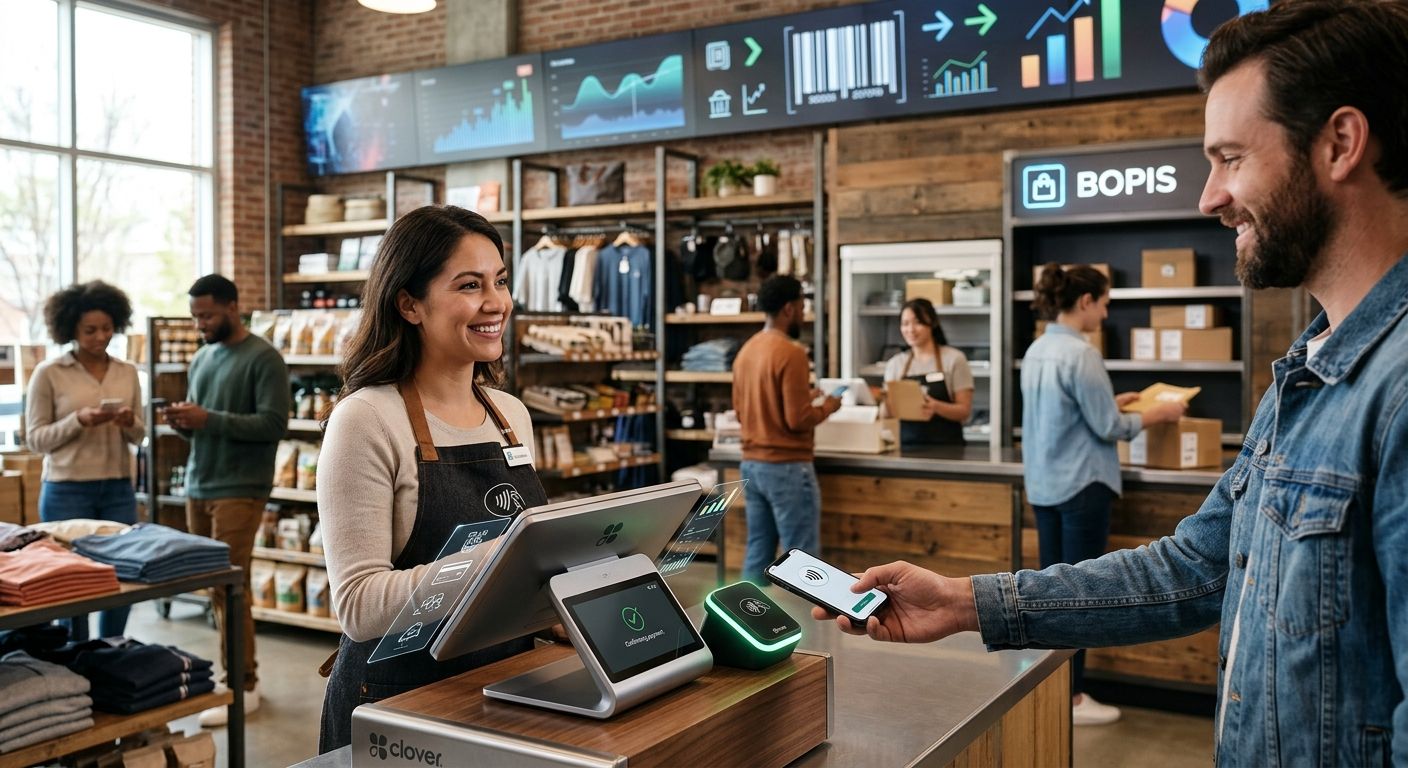
Building on POS fundamentals, omnichannel payments deliver a unified system that processes transactions consistently across in-store POS, e-commerce, and mobile apps. This integration ensures real-time inventory synchronization and a single view of every transaction, as outlined in foundational FAQ guidance from The POS Brokers.
Retailers require a robust omnichannel payments platform to minimize checkout friction and boost efficiency. Key benefits include:
- Reduced cart abandonment by 20-30% through seamless flows;
- Centralized reporting for enhanced fraud detection;
- PCI compliance and tokenization for secure processing;
- Scalability for contactless payments, digital wallets, and BOPIS, growing at 16.49% CAGR per GORSPA industry association insights.
Our integrations prioritize uptime, fast settlement, and straightforward onboarding for retailers of every size, reducing friction and simplifying daily reconciliation workflows.
We partner with businesses to unlock this revenue potential. Explore tailored solutions next.
Preparing for Omnichannel Payments
To capitalize on omnichannel advantages, merchants must first prepare their payment infrastructure. Omnichannel payments require unified transaction processing across in-store, online, and mobile channels to ensure seamless operations and enhanced customer satisfaction.
Assess your existing POS systems for compatibility with omnichannel payment systems. According to The POS Brokers’ expert internal guidance on merchant account configurations, essential features include integrated processing that handles multiple channels transparently, such as interchange-plus pricing for cost efficiency in varied transactions. Upgrade to PCI DSS-compliant gateways that unify customer data for consistent profiles. We recommend selecting merchant services like our solutions that support Clover and Revel POS for robust integrations.
- Evaluate current infrastructure for multi-channel gaps.
- Select compatible merchant accounts and payment gateways.
- Test integrations thoroughly for seamless omnichannel transactions.
- Train staff on unified systems.
- Plan for scalability to handle growth.
Drawing from Wharton School, University of Pennsylvania academic insights, prioritize omnichannel customer experiences through personalized payment options, like app-based rewards akin to Sephora’s model. With these preparations complete, integration of omnichannel payments can begin effectively and deliver measurable operational, financial, and customer experience benefits today.
Define Your Omnichannel Strategy
Building on these benefits, start by defining your omnichannel strategy. An omnichannel payments approach unifies customer data and transactions across online, in-store, and mobile channels for seamless experiences in the US.
Follow these three steps:
- Map current sales channels, including e-commerce, physical stores, and apps, to identify integration needs.
- Audit POS compatibility for real-time inventory sync and interchange plus pricing models that support scalable omnichannel payments.
- Set KPIs like transaction consistency and cart abandonment reduction to measure success.
As outlined in The POS Brokers’ expert guide, POS systems enable multi-channel processing and e-commerce integration for unified flows. With your strategy defined, select the right POS system next. Consult our POS experts for tailored setups. Our team recommends testing integrations and BNPL options to validate workflows before full rollout across channels and multiple locations nationwide.
Select the Right POS Platform
Once business needs are clear, evaluate POS platforms using these criteria for omnichannel payments in the US market. We at The POS Brokers guide merchants to optimal choices supporting seamless sales across channels.
- Omnichannel integration for online/in-store sync, ensuring unified inventory and sales data.
- Support for digital wallets like Apple Pay and Google Pay, vital as US Payments Forum’s industry snapshot notes merchants adapting to omnichannel payment experiences.
- Competitive pricing such as Interchange+, per our proprietary broker expertise on available POS solutions.
Omnichannel Features Comparison
Compare key POS platforms offered by The POS Brokers for omnichannel support. Data from The POS Brokers resources and platform docs.
| Feature | Clover | Lavu | Revel | ShopKeep |
|---|---|---|---|---|
| Online/In-Store Sync | Full | Advanced | Basic | Standard |
| Digital Wallets | Yes | Yes | Yes | Yes |
| Pricing | Yes | Yes | Yes | Yes |
Clover excels in full sync and wallet support with low costs, while Lavu provides advanced features competitively. Revel suits subscription models, and ShopKeep offers standard sync affordably. These omnichannel payment solutions align with trends in alternative payments.
This comparison highlights trade-offs for unified processing. Businesses benefit from platforms enabling seamless omnichannel payments.

POS platform comparison for omnichannel payments: Clover, Lavu, Revel, ShopKeep
Contact The POS Brokers for personalized platform matching. After selection, focus on seamless implementation.
Integrate Multiple Payment Channels
Once selected, integrate channels for omnichannel efficiency. Omnichannel payments unify in-store, online, and mobile transactions, boosting sales by 20-30% through industry trends in seamless customer experiences. Plan, test, and monitor performance metrics across channels to ensure consistent customer experiences.
We guide retailers with three key steps from practical, step-by-step FAQ guidance by The POS Brokers:
- Assess POS compatibility to ensure your system supports multiple channels.
- Select APIs for channel syncing to enable real-time data flow across platforms.
- Test cross-channel transactions for smooth, error-free operations.
These steps reduce checkout friction, deliver unified reporting, and drive higher conversion rates with scalable growth. When evaluating costs for integrated channels, consider interchange plus pricing models for transparency.
With integration set, evaluate pricing impacts like interchange plus. Consult our experts for custom omnichannel payment strategies tailored to your business.
Configure Hardware for Seamless Transactions
Once selected, proper configuration is key to achieving seamless transactions in omnichannel payments. This setup minimizes downtime, accelerates processing, and supports unified online-offline operations, driving revenue for retail businesses. We guide you through essential steps for compatibility and efficiency.
Follow these numbered steps for optimal setup:
- Inspect hardware: Verify cables, ports, and power supplies match your POS system before powering on.
- Pair software and hardware: Download drivers from the manufacturer site. Sync via USB or Ethernet per the manual.
- Test thoroughly: Run sample card swipes, contactless payments, and receipt prints. Confirm zero errors and recalibrate touchscreens if needed. Pair with cost-effective interchange plus pricing for transparent fees, as per The POS Brokers expertise.
Address pitfalls like firmware updates for EMV compliance and secure against tampering. Enable omnichannel payment processing for inventory sync.
Test immediately after setup. With hardware ready, integrate software for full POS functionality.
Implement Security and Compliance Measures
Once selected, secure your POS system with these measures. Rising cyber threats demand robust security and compliance, particularly for omnichannel payments where multi-channel transactions expose data across in-store, online, and mobile channels. The POS Brokers’ expert internal guidance highlights PCI DSS protocols, encryption, and access controls as essential best practices.
- Achieve PCI DSS Level 1 compliance via quarterly vulnerability scans.
- Deploy end-to-end encryption to protect card data in transit.
- Use tokenization to replace sensitive information with unique identifiers.
- Enforce multi-factor authentication for all admin access.
- Conduct annual penetration testing to identify vulnerabilities regularly.
Address omnichannel payments trends with these scalable steps, ensuring secure omnichannel payment processing supports business growth.
Consult our experts for customized audits and prioritized remediation plans. Ongoing monitoring ensures long-term compliance and reduces operational and financial risk overall.
Test and Optimize Your Setup
With your POS hardware and software installed, now test and optimize for reliable operation. Thorough testing prevents downtime and transaction errors in omnichannel payments, as The POS Brokers comprehensive internal expert guide stresses pre-launch checks for seamless performance.
Follow these steps:
- Verify hardware: Connect card readers, receipt printers, and cash drawers. Simulate sales transactions to confirm functionality per the guide.
- Validate software: Run test payments for credit, debit, and omnichannel integrations. Check inventory sync and error logging.
- Test connectivity: Ping servers, assess Wi-Fi stability, and measure load times for omnichannel payment processing.
- Optimize system: Update firmware and drivers, calibrate touchscreens, and tune database queries for faster transactions.
Troubleshoot issues like intermittent connectivity or failed authorizations by re-testing after fixes. Regular re-testing ensures long-term omnichannel success and smooth deployment.
Train Your Team and Monitor Performance
With your POS system installed, empower your team through targeted training on omnichannel payments. We guide retailers to integrate these systems seamlessly, reducing errors and enhancing customer experiences across channels.
Implement this structured training agenda:
- Conduct a 1-hour initial demo on omnichannel payment processing integration.
- Practice role-playing transaction scenarios.
- Hold weekly 15-minute refreshers.
Certify staff via The POS Brokers support resources before live operations, as our authoritative internal support resource advises, helping reinforce common troubleshooting best practices.
Track these key metrics using POS dashboards:
- Transaction processing time under 10 seconds.
- Error rate below 2%.
- Upsell success rate over 15%.
Set alerts for deviations and conduct monthly reviews.
Integrating omnichannel payment features with simulations cuts downtime by 30% and boosts volumes. Consistent monitoring sets the stage for optimization and scaling.
Overcoming Common Implementation Hurdles
While setting up POS systems for seamless omnichannel payments, merchants often encounter common pitfalls that can disrupt operations. These include contactless fraud risks, integration challenges with alternative payment methods, and hardware troubleshooting issues. Don’t let these snag your rollout. We provide proven strategies to keep your business moving forward.
Contactless Fraud Risks
Industry snapshots from the US Payments Forum highlight urgent trends, with card-not-present fraud growing six times faster than card-present fraud amid booming contactless adoption. Protect your systems by taking these steps:
- Enable EMV chip verification and tokenization on all terminals to secure tap-to-pay transactions.
- Implement real-time fraud monitoring tools that flag suspicious patterns during high-volume periods.
Integration Challenges for Omnichannel Payment Systems
Syncing alternative payments like buy-now-pay-later across online and in-store channels demands robust connectivity. Achieve seamless omnichannel payment integration with these actions:
- Deploy API gateways to unify payment flows between POS hardware and e-commerce platforms.
- Test end-to-end transactions in staging environments before live deployment.
Hardware and Software Troubleshooting
Practical troubleshooting guidance from The POS Brokers addresses common issues like connectivity failures and transaction errors. Resolve them swiftly:
- Restart devices and check network cables or Wi-Fi signals for stable connections.
- Update firmware via manufacturer portals to fix software glitches.
Post-implementation checklist:
- Confirm all payment methods process end-to-end.
- Run fraud simulation tests.
- Verify integrations with inventory systems.
- Audit transaction logs for errors.
- Train staff on error protocols.
Overcoming these ensures scalable growth in omnichannel payments.
Achieve Unified Payment Success
Overcome fragmentation with proven unified strategies. In today’s dynamic market, omnichannel payments empower businesses to unify online and offline transactions, driving growth, customer loyalty, and revenue streams seamlessly.
The POS Brokers Cash Discount Program achieves zero-cost processing by eliminating surcharges. We pass PCI compliance and processor fees to customers opting for cards, while offering cash discounts. According to proprietary internal program details from The POS Brokers, this enables seamless omnichannel payment systems with transparent interchange plus pricing, including low markups like 0.20% plus $0.10 per transaction.
Success metrics include:
- Zero merchant costs on card payments
- Boosted customer retention via fee transparency
- Scalable omnichannel payment unification
- Streamlined PCI compliance
Actionable steps:
- Contact us for program qualification
- Integrate POS hardware for unified setup
- Launch with next-day deposits
Transform your payments now. Partner with us for unified success.
This article was researched and written with the assistance of AI tools.
Resources
- Discover Transparent Interchange Plus Pricing for Small Businesses
- Compare Interchange Plus to Tiered Pricing for Savings
- Qualify for Interchange Plus Pricing and Free POS Hardware
- Get Predictable Interchange Plus Pricing for Restaurants
- Calculate Interchange Plus Pricing Fees with Real Examples
- Achieve 20-30% Savings with Interchange Plus Pricing
- Integrate Buy Now Pay Later for Higher Sales
- Unify Omnichannel Payments for Seamless Retail Experiences
- Deliver Tailored Omnichannel 2.0 Customer Experiences
- Explore Omnichannel Payments Trends and Fraud Strategies