Table of Contents
- Merchant Services Trends 2026: Navigating the Future of Payments
- AI-Driven Fraud Prevention: Protecting Payments in 2026
- Omnichannel Payment Systems: Unifying Sales Channels
- Embedded Finance: The Next Frontier in Merchant Services
- Comparing 2026 Payment Tools: Features, Pricing, and Best Fit
- Staying Ahead with 2026 Merchant Services Strategies
Merchant Services Trends 2026: Navigating the Future of Payments
Looking ahead to 2026, merchant services are being redefined by technology and consumer expectations. According to the Smart Payment Association’s payment industry trends and resources, AI-driven fraud prevention and omnichannel payment systems are no longer optional—they are essential strategies for surviving in a competitive landscape. These merchant services trends 2026 reflect the growing need for speed, security, and unified commerce.
AI-driven fraud prevention is rapidly becoming the default defense mechanism. We see machine learning models now analyzing transactional behavior in real time, flagging anomalies that escape rule-based systems. The Smart Payment Association’s work on post-quantum cryptography and digital identity reinforces the industry’s commitment to proactive security measures. For merchants, this translates into lower false declines and stronger fraud blocking without adding friction.
Omnichannel payment systems must deliver a consistent experience whether customers pay in-store, online, or through mobile apps. Our industry analysis shows that seamless integration across these touchpoints improves conversion rates and builds customer trust. In our secure credit card payment fast processing guide, we emphasize that modern hardware—such as the Clover Mini and Ingenico iCT 220—supports the convergence of physical and digital checkout, enabling faster checkout and better data synchronization.
These trends highlight the importance of choosing a provider that aligns with future-ready payment solutions. As the payments ecosystem evolves, partnering with a processor that invests in fraud prevention and omnichannel capabilities will help businesses stay competitive.
AI-Driven Fraud Prevention: Protecting Payments in 2026
As we look at merchant services trends 2026, AI-driven fraud prevention stands out as a critical advancement. These systems leverage real-time machine learning, behavioral analytics, and anomaly detection to identify suspicious transactions instantly, reducing false declines far more effectively than traditional rule-based methods.
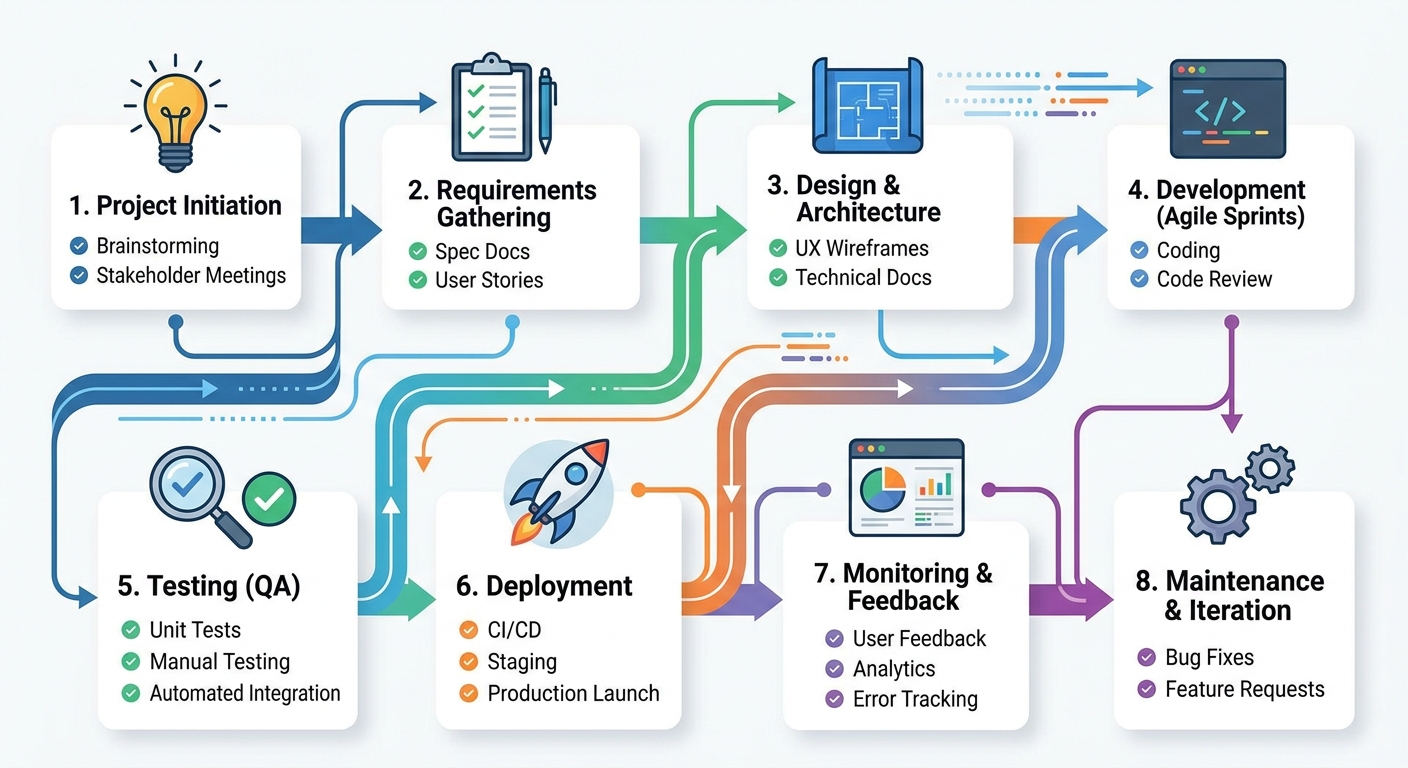
The process flows through four key stages—transaction initiation, real-time data analysis, anomaly detection, and an allow-or-block decision—as illustrated below.

Four-stage AI fraud prevention process visualized for payment security.
From the moment a transaction begins, machine learning models evaluate behavioral patterns, device fingerprints, and historical data to flag deviations, continuously refining detection accuracy.
Regulatory frameworks provide the compliance backbone. The PCI Security Standards Council’s PCI DSS 4.0 (and ongoing updates for 2026) mandates strict access controls, encryption, and continuous monitoring. Businesses must adhere to evolving payment data security standards 2026 set by the PCI Security Standards Council, which we help you navigate. Under the oversight of the Consumer Financial Protection Bureau (CFPB), merchants are required to maintain robust fraud detection and resolution processes, reinforcing consumer protections and reducing chargeback risks.
Combined with omnichannel payment systems, AI strengthens security across all sales channels, ensuring businesses can accept payments confidently. As transaction volumes grow, adopting AI-driven fraud prevention is essential for protecting revenue and customer trust. We remain your partner for better payment processing, helping you stay ahead of these security trends. Alongside fraud prevention, omnichannel payment systems are reshaping how businesses accept payments.
Omnichannel Payment Systems: Unifying Sales Channels
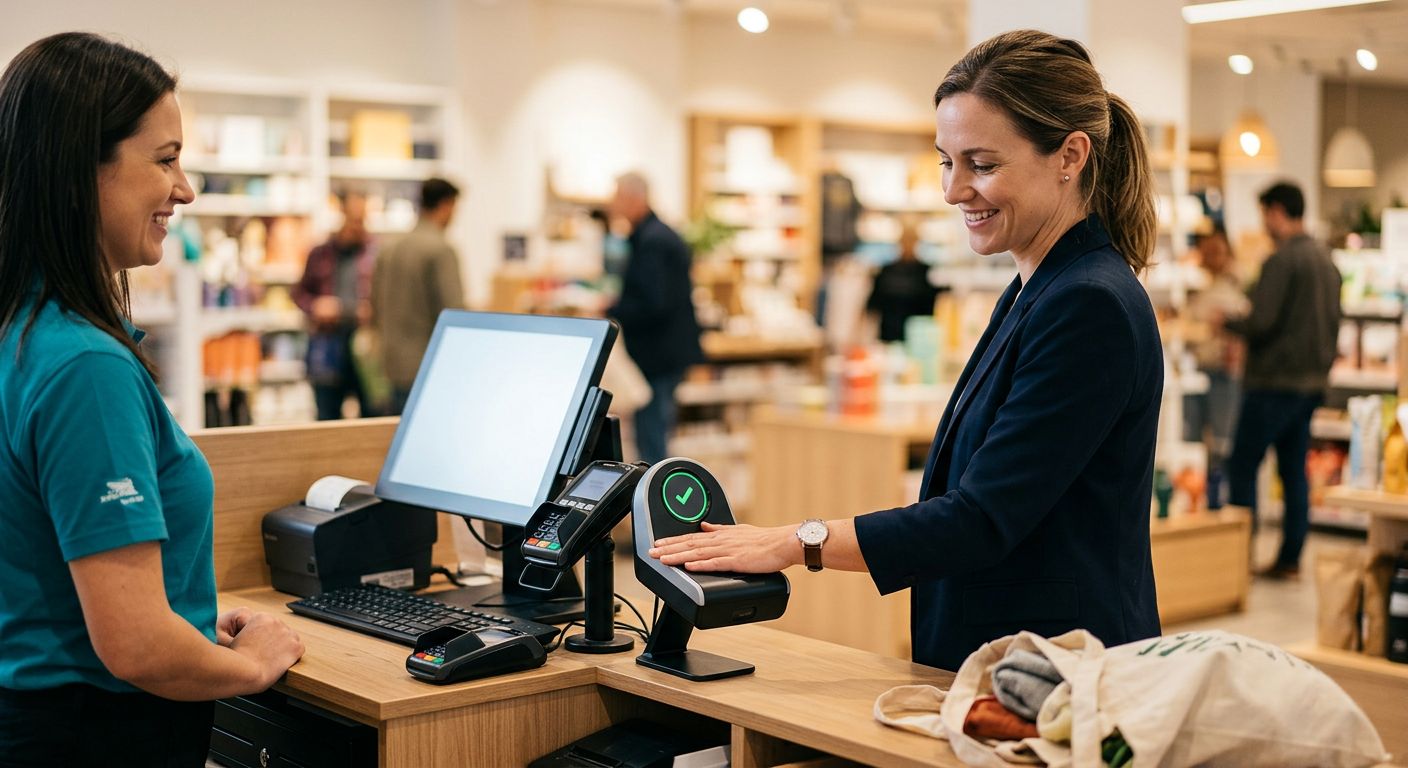
As we look at merchant services trends 2026, omnichannel payment systems are becoming essential for businesses that sell across multiple channels. These solutions allow customers to start a transaction on one channel, such as a mobile app, and complete it in-store without friction. For many retailers, unifying in-store, online, and mobile payments is now a competitive necessity.
Omnichannel payment systems enable real-time inventory synchronization across physical stores, e-commerce platforms, and mobile apps to prevent overselling and maintain accurate stock counts. They unify customer data into a single view of purchase history and preferences, supporting personalized marketing and stronger loyalty programs. By offering consistent payment options, these systems can reduce cart abandonment because shoppers encounter the same familiar checkout wherever they engage. As payment technologies advance, compliance remains critical; we track CFPB regulatory changes 2026 to advise businesses on evolving rules for multi-channel environments. Unified systems also make it easier to deploy advanced security like AI-driven fraud prevention, which monitors transactions across all touchpoints for suspicious patterns.
As your partner for better payment processing, we design omnichannel solutions that integrate with your existing POS hardware and software. Reach out to explore the best options for your business.
Embedded Finance: The Next Frontier in Merchant Services
Embedded finance integrates payment processing and financial services directly into merchant platforms like POS systems and e-commerce software. It’s one of the most significant merchant services trends 2026, driven by demand for seamless, unified payment experiences.
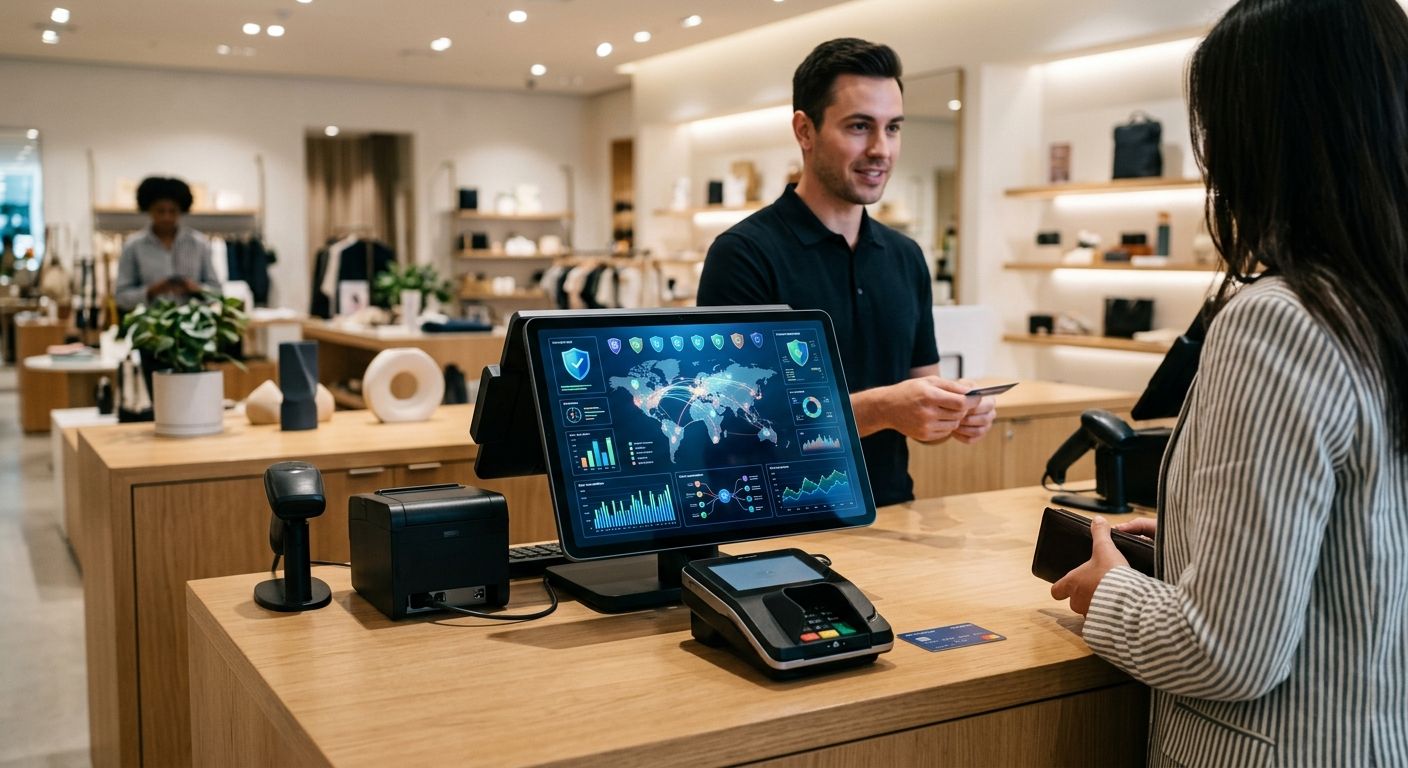
Through our POS hardware and payment processing, we enable the foundational technology that supports embedded finance. By embedding real-time risk analysis, AI-driven fraud prevention can monitor transactions as they happen, reducing chargebacks and false declines. Similarly, omnichannel payment systems benefit from a single integrated platform that unifies in-store, online, and mobile payments — all managed from one dashboard. For merchants using Square, accessing your payment dashboard securely is essential; our guide on Square dashboard login can help if you need to reset your password. Our cash discount programs can also be embedded into these setups, helping offset processing costs while staying compliant. We follow secure processing best practices, as outlined in our internal guide, to protect every transaction.
As embedded finance evolves, businesses that adopt integrated payment infrastructures will be better positioned to meet customer expectations and improve operational efficiency. We’re committed to helping merchants navigate this shift with flexible, future-ready solutions.
Comparing 2026 Payment Tools: Features, Pricing, and Best Fit
Why Compare These 2026 Payment Solutions?
As merchant services trends 2026 highlight, AI-driven fraud prevention, omnichannel payment systems, and embedded finance are reshaping how businesses process transactions. Comparing these tools side by side helps merchants understand their distinct advantages before committing to a solution that aligns with their operational needs.
Feature Comparison Table
The following table summarizes how these three payment technologies stack up on core benefit, integration, pricing, use cases, and compliance. According to the Smart Payment Association, adoption of these tools is accelerating as businesses seek to reduce risk and unify commerce experiences.
| Feature | AI-Driven Fraud Prevention | Omnichannel Payment Systems | Embedded Finance |
|---|---|---|---|
| Core Benefit | Reduces chargeback rates and blocks fraudulent transactions in real time | Unifies in-store, online, and mobile sales data into a single dashboard | Offers integrated payment processing within third-party platforms without separate merchant accounts |
| Integration Effort | Medium – requires API integration with existing POS or payment gateway | High – needs synchronization of inventory, payments, and CRM across channels | Low to Medium – relies on platform partnerships and pre-built connectors |
| Pricing Model | Monthly subscription + per-transaction fees or flat rate | Platform licensing + payment processing fees; often tiered by volume | Revenue sharing or markup on processing; sometimes no upfront cost |
| Best Use Case | High-risk merchants, e-commerce stores, or businesses with frequent chargebacks | Retailers with multiple storefronts, online stores, and mobile sales channels | SaaS companies, marketplaces, and platforms that want to monetize payments |
| Compliance Impact | Supports PCI DSS compliance through tokenization and behavioral analytics | Simplifies compliance by centralizing data, but requires PCI-certified partners | Compliance often handled by the platform provider; merchant still responsible for data security |
This side-by-side evaluation shows that no single tool fits every business—the right choice depends on transaction volume, channel complexity, and compliance responsibilities. PCI DSS compliance remains essential, and all solutions require careful vetting against security standards established by the PCI Security Standards Council.
How to Choose the Right Tool for Your Business
When evaluating these merchant services trends 2026, start by assessing your primary pain points. High chargebacks suggest AI-driven prevention; fragmented sales channels call for an omnichannel approach; SaaS platforms benefit from embedded finance. For businesses using unified platforms like Square, maintaining seamless access to your payment dashboard—such as resolving a Square dashboard login issue quickly—is critical for operational continuity. We recommend factoring in your growth trajectory and existing tech stack to avoid over-investment. Our team can help identify the most competitive processing structure for your specific business model.
Staying Ahead with 2026 Merchant Services Strategies
Building on current capabilities, businesses must now prepare for evolving trends. In exploring the merchant services trends for 2026 in the U.S. landscape, it’s clear that AI-driven fraud prevention and omnichannel payment systems are reshaping the industry.
As we outline in our guide on secure credit card payment processing, AI-driven fraud prevention uses machine learning anomaly detection to significantly reduce chargebacks and protect revenue. At the same time, adopting omnichannel payment systems—unifying in-store, online, and mobile transactions—creates a seamless customer experience. Solutions like Clover and Revel, which we offer, support this integration. For transparency, merchants can manage transactions through platforms like the square dashboard login to monitor security alerts and payment flows.
Cost-saving strategies are also essential. Our Free Clover Placements (subject to qualification), as discussed in our hardware FAQ, eliminate upfront hardware costs, and competitive wholesale rates keep processing expenses low. Additionally, our No Cancellation Fee and same-day setup remove risk when testing new providers. Prioritizing fast, secure payment processing ensures customer expectations are met, as detailed in our secure payment processing guide.
By embracing these forward-looking strategies, businesses can future-proof their payment operations. Partnering with us means access to expert guidance and the right technology to thrive in 2026 and beyond.
Resources