Table of Contents
- Contactless Payment Adoption: Trends Shaping the Payment Landscape
- Key Statistics on Contactless Payment Adoption
- Why Contactless Payments Benefit Your Business
- How Contactless Payments Work
- Best Practices for Adopting Contactless Payments
- Your Path to Contactless Payment Success
Contactless Payment Adoption: Trends Shaping the Payment Landscape
Contactless payment usage is surging, driven by contactless payment adoption statistics that show a consistent year-over-year rise in tap-and-pay transaction volumes. According to the US Payments Forum, this growth reflects deep shifts in consumer expectations around speed, hygiene, and transaction security. For your business, these contactless usage trends signal that upgrading acceptance technology is no longer optional.
The expansion is fueled by several factors. Tokenization has made each tap more secure, while post-pandemic habits have made the speed of contactless a baseline consumer demand. These tap-and-pay growth figures influence merchant payment-processing decisions by making modern, EMV-enabled point-of-sale terminals a requirement. Restaurants and retailers that enable this capability reduce queue times and improve throughput. Expanded consumer education and merchant incentives have made contactless options more practical for many businesses and operators.
Adopting contactless requires capable POS hardware, and competitive processing rates from partners like us can help you integrate this technology without prohibitive upfront costs. Merchant must qualify for free or discounted hardware. This readiness sets the stage for exploring the POS hardware solutions that power today’s contactless and mobile wallet transactions.
Key Statistics on Contactless Payment Adoption
As we transition from discussing the technology that powers modern transactions, it is useful to examine what the numbers reveal about current market behavior. The latest contactless payment adoption statistics in the United States show a clear and sustained shift toward tap-to-pay and mobile wallet usage, driven by faster checkout times, enhanced security, and wider merchant acceptance. At The POS Brokers, we track these trends closely so we can help your business stay ahead with the right hardware and processing strategy.
Consumer Mobile Wallet Usage Trends
Recent contactless payment adoption data confirms that mobile wallet usage has grown substantially, with industry projections placing adoption at 70 percent for 2026. This reflects a steady climb as more consumers embrace the convenience of paying with smartphones and wearables. The increase is partly explained by faster transaction speeds — NFC-based mobile wallet solutions typically process payments in just 1 to 2 seconds, compared to 2 to 3 seconds for standard EMV chip transactions.
We see this acceleration as a response to both technological improvement and shifting consumer expectations. As more shoppers encounter tap-to-pay options at checkout, their willingness to use digital wallets increases, creating a reinforcing cycle that pushes adoption higher each year.
Merchant Tap-to-Pay Acceptance Rates
Turning to the merchant side, tap-to-pay adoption rates have risen in parallel with consumer demand. Over 96 percent of card-present transactions now leverage EMV chip technology, and the infrastructure that supports chip reading frequently enables NFC contactless payments as well. This means many businesses already have the hardware required to accept taps, and those that upgrade see checkout speed improvements of up to 30 percent in some environments.
Our experience at The POS Brokers confirms that merchant adoption is fueled by practical benefits: shorter lines, reduced friction at the register, and customer satisfaction. As mobile wallet usage statistics continue climbing, the business case for enabling tap-to-pay becomes even stronger, and we help our clients implement these capabilities with competitively priced, integrated POS systems.
Geographic and Demographic Adoption Patterns
Adoption is not uniform across all regions and populations. In general, urban areas show higher contactless payment usage than rural communities, where broadband access and smart device penetration can lag. Age also plays a significant role — younger consumers are the most active mobile wallet users, though the gap is narrowing as older demographics become more comfortable with the technology. Income and education levels further influence adoption rates, with higher-income and more educated groups tending to adopt new payment methods earlier.
Regulatory factors also shape adoption patterns by influencing consumer confidence. The CFPB regulatory changes aimed at streamlining financial oversight can affect how secure consumers feel when using emerging payment methods. When the Consumer Financial Protection Bureau clarifies rules around credit and transactional fairness, it can help merchants and buyers engage with contactless systems more confidently.
These diverse adoption patterns illustrate why a one-size-fits-all approach does not work — and why understanding your specific customer base matters when choosing payment technology. In the next section, we will look at how businesses can practically implement contactless payment solutions and capture the benefits this trend offers.

Contactless payment adoption growth from 2020 to 2025 based on US Payments Forum data.
Why Contactless Payments Benefit Your Business
As contactless payment adoption continues to rise, businesses that offer tap-to-pay options gain a competitive edge. According to recent contactless payment adoption statistics, more consumers expect the speed and convenience of contactless transactions, making it a vital part of modern payment processing. Your partner for better payment processing is here to explain how these benefits can transform your operations. We can help you implement tap-to-pay smoothly across locations and streamline staff training for faster, more consistent service.
Faster Transactions and Reduced Wait Times
Accepting a discover credit card can significantly speed up your checkout process. When customers tap to pay, the transaction completes in seconds—far quicker than inserting a chip and waiting for authorization. Our internal Discover card processing FAQ highlights that contactless technology reduces the time customers spend at the register, which allows you to serve more patrons during peak hours. With over 80% of major U.S. merchants accepting Discover, enabling tap-to-pay for this widely used card ensures you cater to a large portion of cardholders. At POS Brokers, we see that merchants who upgrade to contactless-enabled terminals often report smoother, faster payment experiences that improve overall efficiency and order accuracy.
Enhanced Security and Fraud Protection
Security is a top priority when handling payments. Our Clover POS system FAQ explains that Clover terminals use tokenization and encryption to safeguard every tap-to-pay transaction. Tokenization replaces sensitive card details with a unique digital token, preventing actual card numbers from being stored or transmitted within your system. Encryption scrambles transaction data during transmission, rendering it unreadable to unauthorized parties. These built-in protections greatly reduce the risk of fraud and chargebacks while also limiting your PCI compliance scope. Contactless payments also eliminate physical skimming risks because the card never leaves the customer’s hand. We provide Clover hardware with multi-layered security, ensuring that your business and your customers enjoy peace of mind with every transaction.
Improved Customer Satisfaction and Loyalty
Today’s shoppers value convenience above all else. Contactless payment adoption statistics reveal that a majority of consumers now prefer tap-to-pay for its speed and hygiene, and businesses that deliver this option see stronger repeat patronage. By integrating Clover terminals with Discover contactless capabilities, we help you create a modern checkout experience that meets these expectations. Recent studies indicate that a significant percentage of consumers are more likely to return to a business offering contactless payments. With POS Brokers as your partner for better payment processing, adopting these technologies becomes straightforward, helping you build long-term loyalty while staying ahead in a competitive landscape.
How Contactless Payments Work
With contactless payment adoption statistics showing rapid year-over-year growth in the United States, understanding the technology behind these swift transactions is essential for any business owner. At their core, contactless payments allow customers to complete purchases by simply tapping a card, smartphone, or wearable device near a payment terminal. This process, commonly known as tap-to-pay, has reshaped the checkout experience by making it faster and more convenient. The rising contactless payment uptake reflects a broader shift toward digital-first commerce, where speed and security are equally prioritized.
NFC Technology and the Tap-to-Pay Process
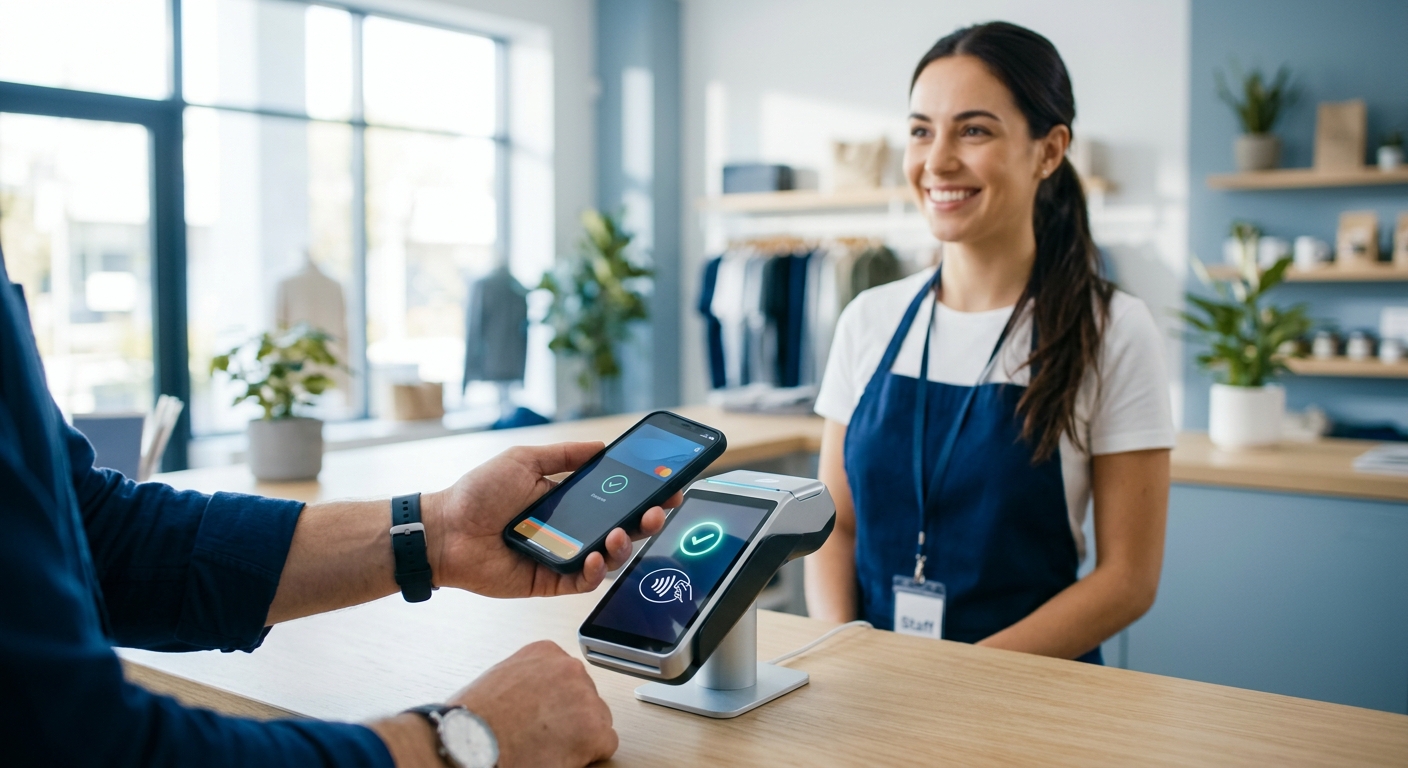
Near Field Communication, or NFC, is the foundational technology that enables contactless payments. NFC allows two devices—such as a credit card and a payment terminal—to exchange data when they are within a few centimeters of each other. When a customer initiates a tap-to-pay transaction, an embedded NFC chip in their card or phone transmits encrypted payment information to the terminal via radio frequency identification. The terminal then forwards this encrypted data through the payment network for authentication. The network verifies the card details with the issuing bank and sends back an approval or decline message, all in less than a second. This streamlined flow eliminates the need for physical card insertion, reducing wear on hardware and shortening queue times at the register.
Tokenization and Payment Data Security
A critical layer of security in contactless transactions is tokenization, which replaces sensitive cardholder data with a unique, randomly generated token. Instead of transmitting your actual primary account number (PAN), the system sends this substitute token, which has no exploitable value if intercepted. Even if a merchant’s system is compromised, the stolen tokens cannot be used for fraudulent purchases elsewhere because they are tied to a specific device, merchant, or transaction. This makes the tap-to-pay experience not only fast but also significantly more secure than traditional magnetic stripe payments. The original card data remains stored in a highly secure token vault managed by the payment network, completely isolated from the merchant’s environment. This process ensures that your business and your customers benefit from reduced exposure to data breaches.
Integration with POS Systems and Mobile Wallets
Modern point-of-sale systems are designed to accommodate this technology right out of the box. Hardware options like Clover POS terminals come equipped with integrated NFC readers, allowing businesses to accept contactless payments immediately upon setup. Beyond physical cards, mobile wallets such as Apple Pay and Google Pay rely on tokenization and an additional security feature called device-specific dynamic codes. When paying with a smartphone, the wallet authenticates the user via biometrics, then transmits a device account number combined with a one-time unique security code. The combination authorizes the transaction without ever sharing the actual card number. At The POS Brokers, we guide clients through the merchant account activation that enables these processing features, ensuring compatibility with all major contactless payment methods. Now that you understand the mechanics behind the tap, the next section will focus on setting up a fully integrated contactless system for your business.
Best Practices for Adopting Contactless Payments
Recent contactless payment adoption statistics show a decisive shift toward tap-to-pay transactions across the United States, making it essential for merchants to implement these systems correctly. Moving beyond simply understanding the benefits, business owners need a clear, actionable plan to integrate contactless payments into their daily operations. We recommend focusing on three core practice areas: upgrading your point-of-sale hardware, training your team, and optimizing the checkout flow to minimize friction. These steps ensure your business can accept NFC payments securely and efficiently, meeting modern customer expectations for a fast and seamless checkout experience.
Upgrading Your POS Hardware for Contactless
The foundation of accepting contactless payments is having the right hardware in place. Your POS terminal must be equipped with Near Field Communication (NFC) technology to process tap-to-pay transactions from cards, smartphones, and smartwatches. We recommend starting with a hardware audit to identify which of your current terminals have NFC capabilities and which need an upgrade. Key hardware considerations include:
- Confirming your existing terminal supports NFC and the latest payment security protocols
- Evaluating whether a standalone card reader or a fully integrated smart terminal best fits your counter space
- Selecting a system that integrates smoothly with your current POS software and peripheral devices
- Ensuring your hardware provider adheres to strict payment processing security standards for every tap-to-pay transaction
Modern, NFC-enabled terminals like our clover POS systems support contactless payments out of the box and integrate with a full suite of business management tools. According to The POS Brokers, qualifying new merchants may also be eligible for a free Clover placement, making the hardware transition a straightforward investment. The right terminal does more than just read a card; it becomes the hub for secure, rapid contactless transactions.
Training Staff and Communicating with Customers
New hardware is only effective when your team knows how to use it and your customers know it’s available. Training your staff on contactless transactions should cover the technical steps and customer communication. Employees need to be comfortable guiding a customer through a tap-to-pay payment, from locating the NFC reader on the terminal to confirming a successful transaction. We recommend running several test transactions during a slow period so staff can practice without the pressure of a line.
Equally important is addressing payment security. Tap-to-pay is one of the most secure payment methods because it uses the same dynamic encryption and tokenization technologies as EMV chip cards. When merchants reference The POS Brokers’ internal guidance on payment processing security, they can confidently reassure both staff and customers that no actual card data is ever transmitted during a contactless transaction. Encourage your team to actively mention the option: a simple phrase like “We accept tap-to-pay whenever you’re ready” can increase adoption and speed up the line.
Optimizing Checkout Flow to Minimize Friction
A successful contactless payment rollout depends on a thoughtful checkout layout. The terminal should be placed at an easy-to-reach angle on the customer’s side of the counter, allowing them to tap their card or phone without twisting or leaning. Immediately above or beside the terminal, place clear signage featuring the universal contactless symbol. This visual cue prompts customers to tap on their own, even before a team member invites them to do so.
We recommend integrating your new contactless workflow with your existing POS system so that the entire process remains fluid. Following internal best practices for POS system integration, The POS Brokers suggests a checkout flow where the cashier totals the sale, the terminal automatically prompts for payment, and the customer taps in one continuous motion. When executed well, the entire contactless transaction should take under 10 seconds. Revisit your terminal’s placement after the first week to see if long queues or customer confusion points to a need for a better angle, brighter signage, or a simplified on-screen prompt. By refining your hardware setup, empowering your staff, and engineering a frictionless checkout, you create a payment experience that gets customers out the door faster and positions your business for the next wave of payment innovation.
Your Path to Contactless Payment Success
As businesses adapt to shifting consumer expectations, contactless payment adoption statistics reveal a clear and accelerating trend toward faster, more hygienic transactions. When reviewing contactless payment adoption statistics in the United States, it’s evident that growth in tap-to-pay and mobile wallet usage has reshaped how customers prefer to pay, driving merchants to prioritize modern point-of-sale capabilities.
The adoption trends for contactless payments show that speed and convenience are no longer optional—they’re baseline expectations. The growth of tap-to-pay has been fueled by widespread NFC-enabled cards and smartphones, with businesses of all sizes seeing rising transaction volumes through contactless channels. To harness this shift, having the right POS hardware and a reliable payment processing setup is critical from day one.
At The POS Brokers, we make that transition seamless. Our solutions—including Clover, Lavu, and other integrated platforms—are built to support NFC tap-to-pay along with every other modern payment method, so you can capture every sale without friction. New merchants may also qualify for free or discounted Clover hardware, subject to eligibility, and our no-setup-fee, no-cancellation-fee policy ensures you can adopt the technology without unnecessary risk. Once you understand the adoption trends, the next step is choosing the right equipment—and we’re here to help you take it. Your partner for better payment processing.
Resources
- Get Discover Credit Card with 5% Cash Back
- Get Clover POS Hardware with Same-Day Approval
- The POS Brokers: Registered ISO for Clover Systems
- Discover Digital Payment Trends for 2026
- Learn about Payment Processing with Integrated POS
- The POS Brokers: Credit Card Processing Solutions
- Choose Retail POS System with Inventory Tracking
- Join U.S. Payments Forum for Payment Innovation
- Learn about CFPB Regulatory Changes for Business