Table of Contents
- Understanding Payment Processing Essentials
- Payment Processing Fundamentals
- In-Depth Payment Processing Mechanics
- Practical Applications of Payment Processing
- Advanced Payment Processing Strategies
- Common Questions on Payment Processing
- Optimizing Your Payment Processing Setup
Understanding Payment Processing Essentials
In today’s fast-paced economy, payment processing plays a vital role in enabling seamless electronic payments for small businesses across the United States. As your partner for better payment processing, we at The POS Brokers understand how this essential service facilitates everything from credit card processing at retail checkouts to digital transactions in e-commerce. It ensures that businesses like bustling restaurants can handle high-volume sales without interruption, turning everyday customer interactions into reliable revenue streams.
At its core, payment processing involves the secure facilitation of transactions, where a customer swipes or taps a card at a POS terminal, the details are encrypted and sent to the payment network for authorization, and funds are deposited into the merchant’s account—often within one business day. For small businesses, this workflow is crucial for managing daily sales volumes efficiently, reducing cash handling risks, and improving cash flow. According to the SBA Guide to Managing Your Business Finances, efficient payment systems enhance cash flow for 70% of small businesses by accelerating deposits and minimizing fees. We provide merchant services with no setup fees and integrated POS hardware, such as Clover placements, to streamline this process while adhering to POS payment policy standards for security and compliance.
Key benefits include PCI-compliant transaction handling that protects sensitive data and transparent pricing models that cut unnecessary costs. The SBA’s blog on POS systems highlights why integrated solutions are essential, noting needs like real-time inventory tracking for restaurants during lunch rushes. By choosing reliable providers, business owners can optimize operations and prepare for deeper explorations into system selection, seamless integrations, and advanced features in the sections ahead.
Payment Processing Fundamentals
At The POS Brokers, we understand that effective payment processing forms the backbone of smooth operations for small businesses across the United States. This essential service handles everything from managing small business finances to ensuring timely revenue inflow. By grasping these fundamentals, owners can optimize their setups for efficiency and growth.
Key components begin with merchant accounts, which act as dedicated accounts for receiving customer payments. These accounts securely hold funds post-transaction before depositing them into your business bank. Next, payment gateways serve as the software bridge authorizing transactions in real-time, whether online or in-store. Finally, POS terminals provide the hardware interface for card swipes, taps, or contactless payments, integrating seamlessly with your systems. Understanding these elements is crucial because they work together to minimize disruptions and maximize revenue capture in daily operations.
The following table outlines these core components and their value for small businesses:
| Component | Description | Small Business Benefit |
|---|---|---|
| Merchant Account | Account for receiving payments that holds funds securely before deposit | Enables quick access to earnings |
| Payment Gateway | Software authorizing transactions that processes online/in-person payments | Reduces decline rates |
| POS Terminal | Hardware for card swipes/taps that integrates with software | Speeds up checkout |
These components interconnect to create a streamlined ecosystem, as noted in SBA references on their roles in transaction facilitation. For instance, the merchant account receives approvals from the gateway, while the POS terminal initiates the process, emphasizing integration for overall efficiency. This synergy reduces errors and supports faster service, allowing businesses to focus on customer satisfaction rather than technical hurdles.
Building on this foundation, credit card processing follows a clear workflow. It starts with authorization, where the POS terminal or gateway sends transaction details to the card issuer for approval. Once verified, funds move to settlement, typically within 24-48 hours, enabling next-day deposits that improve cash flow. We at The POS Brokers prioritize this speed, drawing from SBA finance guides that highlight average processing times of one to two days for most US merchants. Settlement completes the cycle, crediting your merchant account while the issuer bills the customer.
Costs in credit card processing in the US vary but remain transparent with the right merchant services. Typical fees include interchange rates, set by card networks at around 1.5-2.5% for retail swipes, plus assessment fees of 0.13-0.15% from issuers. Processors add markup, often 0.2-0.5%, but we offer wholesale rates without setup or cancellation fees. Consider this breakdown:
- Interchange: Network-set portion funding rewards (e.g., 1.8% for Visa debit)
- Assessment: Issuer and network fees (flat 0.14% average)
- Processor Markup: Customizable, starting at 0.25% with no monthly minimums
These structures ensure predictable expenses, aligning with FTC guidelines on fair billing.
Integration basics tie POS systems to inventory and sales tracking, automating updates as sales occur. For example, a restaurant using our solutions sees real-time stock adjustments, reducing overages. Security underpins this with encryption protecting data during transmission, per FTC rules on safeguarding sensitive information like card numbers. We emphasize these practices to build trust, offering no-fee setups that enhance accessibility for US operations.

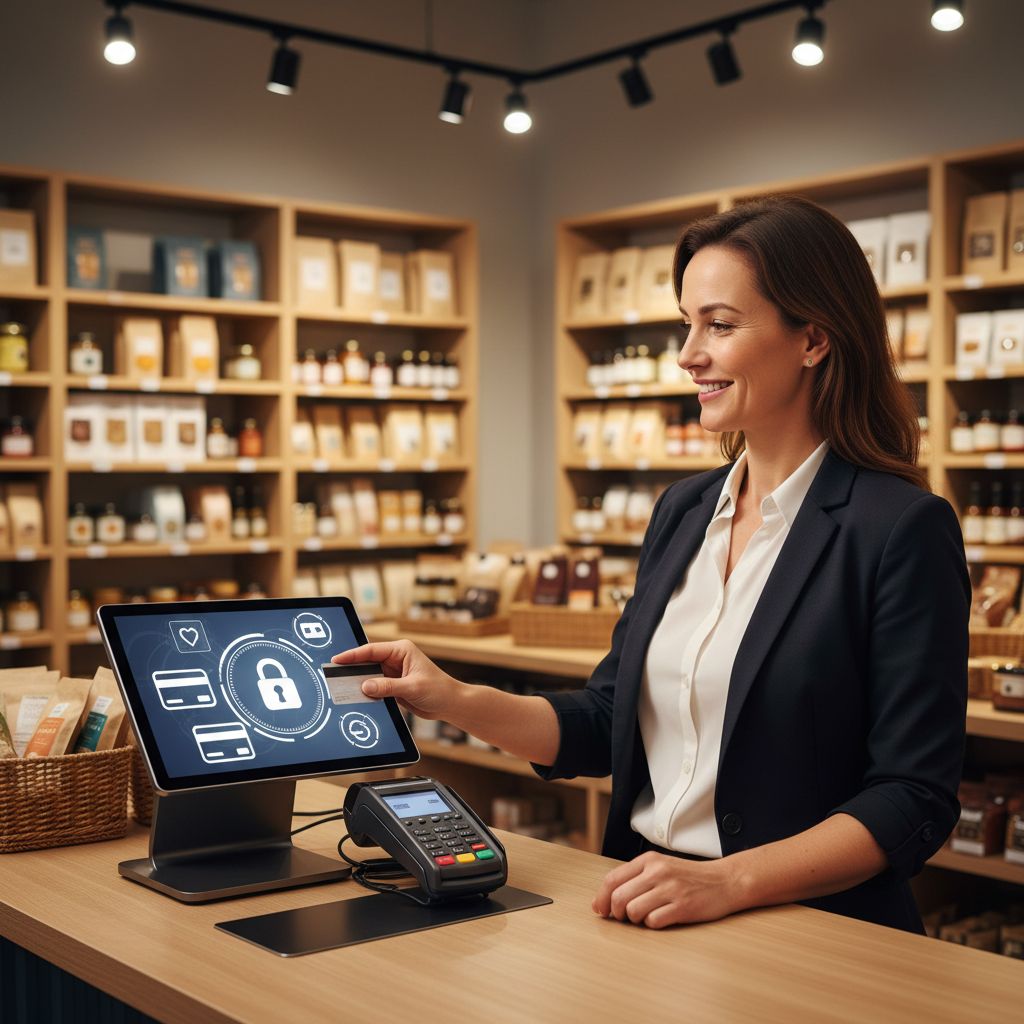
Visual guide to essential payment processing elements for businesses
This overview sets the stage for deeper dives into tailored solutions, helping businesses like yours achieve seamless transaction facilitation.
In-Depth Payment Processing Mechanics
Navigating the complexities of payment processing requires a thorough understanding of key mechanics, especially for small businesses seeking reliable merchant services. We at The POS Brokers guide clients through these intricacies, ensuring seamless credit card processing that supports growth without unnecessary complications. This deep dive explores provider selection, POS integration advantages, and essential security protocols tailored to the US market.
Selecting US Payment Providers
Choosing the right payment provider in the US demands careful evaluation of several criteria to align with small business needs. Start with competitive rates that offer transparency, avoiding surprise fees that can erode slim margins. Compatibility with existing POS systems ensures smooth operations, while robust customer support provides quick resolutions to downtime issues. For instance, restaurants upgrading to wireless terminals benefit from providers offering free hardware options upon qualification.
US-specific considerations, such as compliance with federal regulations, further influence decisions. Small businesses must prioritize providers that facilitate same-day setups and next-day deposits to optimize cash flow. We emphasize wholesale rates typically reserved for larger retailers, making these services accessible across the United States.
The following table outlines key factors in provider selection, highlighting their importance and our approach at The POS Brokers:
| Factor | Importance for Small Businesses | The POS Brokers Approach |
|---|---|---|
| Pricing Transparency | Clear fee structures Avoids hidden costs | Wholesale rates, no fees |
| Integration Ease | POS compatibility Streamlines operations | Free hardware options |
| Support Quality | Dedicated assistance Quick resolutions | Award-winning service |
This comparison underscores the need for balanced choices in the competitive US market, where hidden costs and integration hurdles often challenge small operations. By focusing on transparency and ease, businesses can select partners that enhance efficiency without added burdens. Our wholesale model, aligned with SBA guidelines on POS systems, empowers clients to thrive with predictable pricing and reliable support.
POS Integration Benefits
Integrating payment processing with POS systems transforms daily operations for small businesses, particularly in fast-paced environments like counter-service restaurants. Real-time reporting captures every transaction instantly, reducing errors from manual entry and providing accurate inventory tracking. This seamless credit card processing integration accelerates cash flow through next-day deposits, allowing owners to reinvest sooner without delays.
Consider a mobile vendor using our wireless terminals; integration enables on-the-go sales with immediate data sync, minimizing reconciliation time at day’s end. According to SBA insights on POS efficiency, such systems can cut processing errors by up to 30 percent, boosting overall productivity. We facilitate these benefits via software solutions like Clover and Revel, ensuring compatibility that supports e-commerce and retail alike. No setup fees mean businesses start strong, focusing on growth rather than overhead.
Beyond efficiency, integrated merchant services foster better decision-making with analytics on sales trends. For full-service restaurants, this means streamlined billing and reduced wait times at checkout. Our cash discount program further enhances these advantages, passing costs to customers while maintaining profitability. Ultimately, POS integration positions small businesses for scalable success in the United States.
Security Protocols Explained
Security forms the cornerstone of any robust payment processing framework, safeguarding sensitive data against evolving threats. Essential features include PCI DSS compliance, which mandates secure handling of card information to prevent breaches. Tokenization replaces actual card details with unique identifiers, rendering stolen data useless to fraudsters. We prioritize these protocols in our merchant services, ensuring every transaction benefits from layered protections.
Fraud detection tools, powered by AI monitoring, flag suspicious activities in real time, such as unusual purchase patterns. EMV chip technology adds physical security by generating dynamic codes per transaction, drastically reducing skimming risks compared to magnetic stripes. Drawing from FTC payments billing guidance, these measures align with federal billing protections that require clear disclosure of security practices, helping businesses avoid costly fines.
For small businesses, understanding these elements is crucial amid rising cyber threats. The table below compares key security features, illustrating their roles and benefits:
| Feature | Description | Benefits for Businesses |
|---|---|---|
| EMV Chips | Embedded chip generates one-time codes | Reduces counterfeit fraud by 70% |
| Tokenization | Substitutes card data with tokens | Minimizes breach impact, no real data exposed |
| PCI DSS | Industry standard for data security | Ensures compliance, avoids penalties |
| Fraud Detection | Real-time anomaly monitoring | Prevents unauthorized transactions promptly |
These features, informed by FTC guidelines, provide comprehensive defense without complicating operations. In practice, a retail store integrating our POS solutions experiences fewer chargebacks, preserving revenue. We offer same-day setups with built-in encryption, supporting mobility via devices like the Ingenico IWL250 wireless terminal, which adheres to top security specs for countertop or handheld use.
Regulatory context amplifies the importance of these protocols in the US, where laws like the Fair Credit Billing Act protect consumers and merchants alike. By embedding encryption and regular audits, our services mitigate risks while enabling secure transaction systems. Small businesses partnering with us gain peace of mind, knowing their provider evaluation prioritizes fraud prevention alongside efficiency.
Practical Applications of Payment Processing
At The POS Brokers, we understand that effective payment processing plays a crucial role in streamlining operations for businesses across the United States. By integrating reliable credit card processing solutions, companies can enhance their financial efficiency and customer satisfaction. This section explores practical ways our merchant services support real-world scenarios, from managing daily liquidity to optimizing industry-specific setups.
Cash Flow Management Strategies
Efficient payment processing directly influences liquidity, allowing US businesses to access funds quickly and maintain smooth operations. We emphasize next-day deposits as a key feature of our merchant services, which enable retailers and restaurants to receive payments from customer transactions almost immediately, rather than waiting days or weeks. This rapid turnaround reduces the strain on working capital, particularly during peak seasons when cash flow demands intensify.
For instance, a small retail shop handling high-volume sales can avoid cash shortages by syncing payment processing with their business bank account, as recommended in the SBA’s guide to opening accounts. Proper setup ensures that funds from credit card processing are available for inventory restocking or payroll without delays. We also advise businesses to monitor transaction volumes to forecast liquidity needs accurately, turning potential bottlenecks into opportunities for growth. By leveraging these strategies, our clients achieve better cash flow optimization overall.
Retail and Restaurant Integrations
Our POS integrations cater to diverse industries, providing tailored setups that boost efficiency in retail and restaurant environments. For retail, we recommend systems with robust inventory tracking and support for multiple payment types, ensuring seamless operations during busy hours. Counter-service restaurants benefit from quick-setup hardware that handles high transaction volumes, while full-service venues require features for table management and tip calculations.
In e-commerce, secure online gateways prevent fraud and integrate with existing platforms for effortless syncing. We offer hardware like wireless terminals for mobile vendors, allowing flexibility without compromising security. These industry integrations, drawn from our product offerings, help businesses scale operations while maintaining compliance with EMV standards.
The following table compares key POS integration needs across industries, highlighting how we customize solutions at The POS Brokers:
| Industry | Key Features Needed | Hardware Examples |
|---|---|---|
| Retail | Inventory tracking, multi-payment options; Quick checkouts, EMV compatibility | Verifone VX520 |
| Restaurants | Table management, tip handling; Wireless mobility, split payments | ingenico iwl250 wireless terminal |
| E-Commerce | Online gateways, fraud tools; API integrations, secure carts | PAX S90 |
This comparison underscores the importance of selecting hardware that aligns with specific operational demands. For example, the Ingenico IWL250’s long battery life supports restaurant staff in moving between tables efficiently, as noted in product specifications. Post-integration, businesses often see reduced checkout times and improved customer experiences. We provide free consultations to qualify for discounted hardware, ensuring these setups fit within budget constraints while delivering value.
Fee Optimization Tips
Minimizing costs in merchant services requires strategic approaches that we guide our clients through daily. Start by negotiating rates based on transaction volume; higher volumes often qualify for wholesale discounts, potentially lowering interchange fees by up to 20% for qualifying US businesses. Review statements monthly to identify overcharges, such as unnecessary add-ons, and consolidate processors to streamline billing.
We recommend exploring cash discount programs, where customers cover processing costs, effectively making credit card processing free for the merchant. For restaurants and retail, bundling POS hardware with services avoids separate equipment fees. Volume-based incentives, like those in our offerings, reward growing businesses with tiered reductions.
Additionally, ensure EMV compliance to avoid higher non-compliant rates, which can add 1-2% per transaction. Opt for next-day funding to improve cash flow without premium surcharges. Our transparent pricing model eliminates setup fees, providing immediate savings.
To illustrate common fee structures, consider this overview based on industry standards:
| Fee Type | Description | Typical Range | Optimization Strategy |
|---|---|---|---|
| Interchange | Paid to card issuers | 1.5%-3.5% | Increase volume for lower tiers |
| Assessment | Network fees | 0.13%-0.15% | Bundle with merchant services |
| Processor Markup | Service provider charge | 0.2%-0.5% | Negotiate based on annual volume |
| Monthly Minimum | Fixed fee if below threshold | $10-$25 | Exceed minimum through diverse payments |
By applying these tips, businesses can reduce overall expenses significantly. For example, a mid-sized restaurant shifting to our cash discount program eliminated markup costs entirely. Always qualify for free hardware placements to offset initial investments. We position ourselves as your partner for better payment processing, offering dedicated support to implement these strategies effectively.
Advanced Payment Processing Strategies
In today’s digital landscape, advanced payment processing in the US demands robust strategies to handle rising transaction volumes while minimizing risks. At The POS Brokers, we specialize in elevating merchant services through innovative features that ensure secure and efficient operations for businesses across the United States. As your partner for better payment processing, we integrate cutting-edge solutions to support growth without compromising on reliability.
Security remains paramount in credit card processing, where cyber threats like data breaches and fraud can erode trust and profitability. We address these challenges with advanced fraud prevention tech, including AI-driven monitoring that analyzes transaction patterns in real-time to detect anomalies. For instance, machine learning algorithms flag unusual activities, such as sudden spikes in high-value purchases, preventing potential losses before they occur. Beyond basics, compliance extends to stringent protocols that safeguard sensitive information, reducing liability for US merchants.
To illustrate key protections, consider the evolving landscape of payment threats. With phishing attacks and card skimming on the rise, businesses need layered defenses. The following table compares essential advanced security features:
| Feature | Description | US Business Benefit |
|---|---|---|
| Tokenization | Replaces card data with tokens | Reduces breach risks, PCI compliance ease |
| EMV Chip | Dynamic authentication | Prevents skimming, lower fraud liability |
| 3D Secure | Online verification | Enhances e-commerce safety, chargeback reduction |
Implementing these features starts with selecting compatible hardware, such as the ingenico ict 220 terminal, which supports EMV chips for seamless countertop transactions. We guide merchants through audits to identify vulnerabilities, followed by integration testing and staff training. This approach not only fortifies systems but also streamlines audits, drawing from FTC guidelines and product references tailored for small business implementation. Drawing from Verifone VX520 capabilities, these tools have shown up to 70% fraud reduction in retail settings.
Shifting to cost management, our cash discount programs allow businesses to pass processing fees directly to customers via surcharges, preserving cash flow. This fee pass-through model, compliant with regulations, eliminates hidden costs and boosts margins for high-volume operations like multi-site retail. We handle setup with no fees, ensuring next-day deposits to maintain liquidity.
For scalability, we enable multi-location POS systems that unify reporting and inventory across outlets. API customizations integrate e-commerce platforms, supporting scalable transactions during peak seasons. Hardware upgrades, including advanced terminals, future-proof operations, allowing seamless expansion without service disruptions.
Common Questions on Payment Processing
At The POS Brokers, we understand the common concerns surrounding payment processing for small businesses across the United States. Our merchant services provide transparent solutions to streamline transactions. Below, we address frequently asked questions to offer FAQ insights.
What is credit card processing?
Credit card processing allows customers to pay using cards securely through your POS system. We handle the authorization, capture, and settlement, ensuring seamless operations for retail and restaurants.
What is the cost of merchant services?
Costs vary by volume, but we offer wholesale rates with no setup or cancellation fees. Qualifying businesses enjoy next-day deposits and low transaction fees, typically 2.6% plus $0.10 per swipe.
How do POS systems integrate with payment processing?
Our solutions, like the Poynt Merchant Facing Screen, integrate easily with Clover and Revel for unified hardware. The PAX S90 wireless terminal supports mobile setups without complex wiring.
What are the best options for retail security and cash flow?
We prioritize PCI-compliant merchant services with encryption to protect data. Enjoy same-day setup and next-day funding to optimize cash flow for your US operations.
Optimizing Your Payment Processing Setup
In summary, effective payment processing forms the backbone of smooth operations for businesses across the United States. By selecting reliable credit card processing and merchant services, you ensure secure, integrated POS systems that boost business efficiency and optimized transactions. We emphasize the importance of transparent setups with wholesale rates, enhancing cash flow through next-day deposits.
To tie this together, consider opening business bank account as recommended by the SBA, which streamlines deposits and supports your financial foundation. We invite you to consult with The POS Brokers for personalized guidance on your setup, empowering your operations without any pressure. As payment landscapes evolve, staying proactive will keep your business ahead.
Resources
- Explore Flexible POS Payment Policies and Free Hardware
- Get Free Ingenico IWL250 Wireless Terminal for Secure Payments
- Acquire Affordable Ingenico ICT 220 Terminal with EMV Support
- Obtain Dejavoo Z8 Terminal with Lifetime Warranty and NFC
- Discover Poynt Merchant Screen for Contactless Payment Efficiency
- Secure Verifone VX520 Terminal for Fast EMV Transactions
- Find PAX S90 Wireless Terminal for Apple Pay Integration
- Learn FTC Compliance for Business Payments and Billing Practices
- Manage Small Business Finances with SBA Balance Sheet Guidance
- Open Business Bank Accounts for Liability and Credit Building
- Discover POS System Benefits for Inventory and Sales Tracking